

How to Manage Emotional Overwhelm: In the Moment and Over Time
Managing emotional overwhelm takes two jobs done together. In the moment, you slow your body down and shrink the problem to something you can act on. Over weeks, you build the sleep, routines and nervous system support that make the next wave smaller. Our PRESENCE supplement is built for that second job: a restorative approach to the nervous system, not a stimulant that adds to the noise.
This guide covers both jobs, step by step, for people who want to think clearly and stay level at work, at school and at home.
TL;DR
- Emotional overwhelm is the feeling that your reactions have outgrown your ability to handle them. It is a signal, not a character flaw.
- In the moment, use one coping skill at a time: slow breathing, grounding, or reducing the demand in front of you. A skill may take several attempts to work.
- Over time, sleep (7 or more hours for adults), movement, social support and a realistic workload do most of the work.
- PRESENCE is our capsule formula designed to support neurotransmitter health and nervous system resilience without harsh stimulants.
- If you feel unable to cope, or have thoughts of suicide, talk to a mental health professional or call or text 988 now.
Table of Contents
- What emotional overwhelm feels like
- What to do in the first five minutes
- A quick reference for the moment
- Why overwhelm keeps coming back
- Build capacity: the habits that move the needle
- Where PRESENCE fits
- Our perspective
- When overwhelm needs more than self-help
- A simple four-week plan
- FAQ
- Sources
What emotional overwhelm feels like
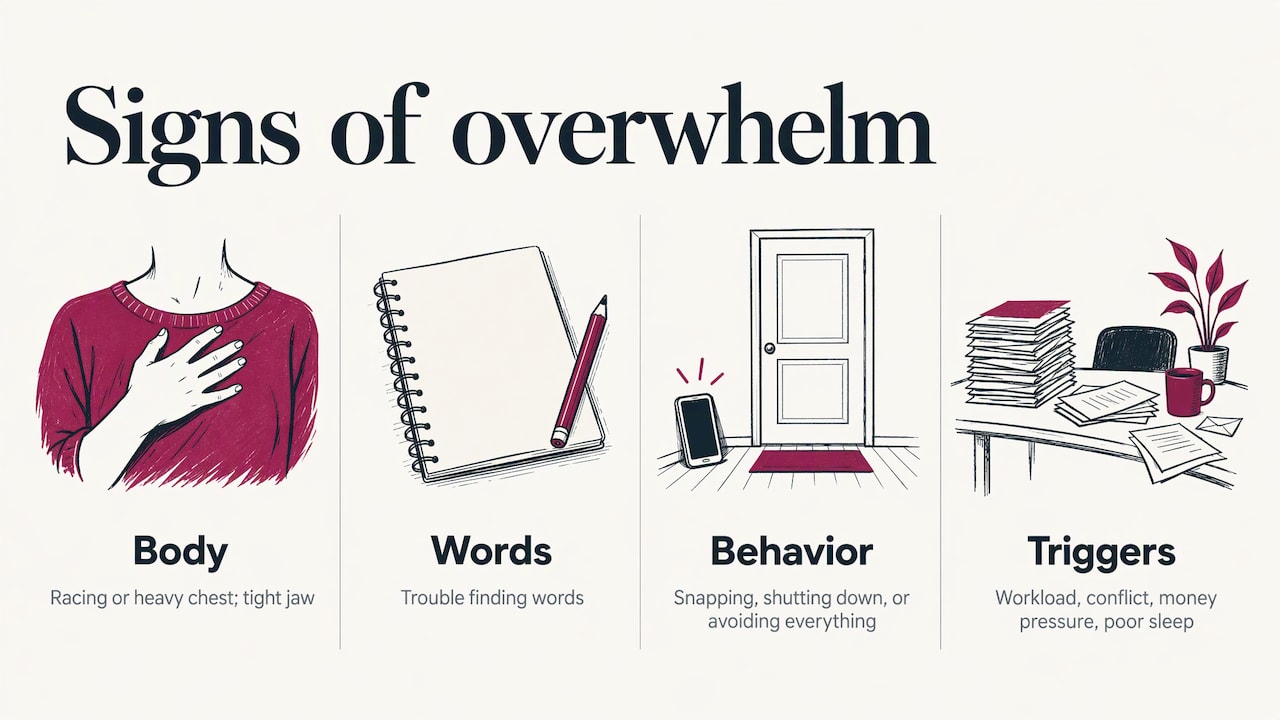
Emotional overwhelm is not a clinical diagnosis. It is the name people give to a moment, or a stretch of weeks, when feelings arrive faster than you can process them. Common signs include a racing or heavy chest, a tight jaw, trouble finding words, snapping at people you care about, wanting to shut down or avoid everything, and being unable to decide what to do first.
The usual triggers are ordinary ones: a heavy workload, a conflict, money pressure, caregiving, poor sleep, or several small stressors stacking up with no recovery between them. The NAMI HelpLine makes a useful point here: distressing feelings are not bad in themselves, even though they can feel overwhelming. The aim is not to stop feeling. It is to stay able to act while you feel.
That reframe matters, because many people respond to overwhelm by fighting it, and fighting a feeling adds a second layer of stress on top of the first.
What to do in the first five minutes
When you are in it, you do not need a theory. You need one small action. The NAMI HelpLine suggests reaching for a coping skill when thoughts, feelings or physical sensations start to interfere with your life, and it is honest that a skill may take time or several attempts to help. Treat each one as practice, not a pass-or-fail test.
Step 1: Name what is happening
Say it plainly, silently or out loud: “I am overwhelmed right now.” Naming it separates you from the feeling just enough to take the next step. Do not analyze the cause yet.
Step 2: Slow your body
The American Psychological Association suggests a simple exercise: sit, breathe, and focus on the present moment for about five minutes. When thoughts intrude, gently bring your attention back. You are not trying to empty your mind. The returning is the exercise.
A practical version: breathe in through your nose for four counts and out through your mouth for six. A longer exhale is easier to sustain than a deep inhale when you are tense.
Step 3: Ground yourself in the room
Grounding means pulling attention out of the spiral and into what is physically around you. Try the 5-4-3-2-1 method: name five things you see, four you can touch, three you hear, two you smell and one you taste. Press your feet into the floor. Hold something cold. These work because they give your attention a concrete job.
One safety note from the National Center for Complementary and Integrative Health (NCCIH): relaxation techniques are generally considered safe for healthy people, but some report more anxiety, intrusive thoughts or a fear of losing control. Rare reports also link certain techniques to worsened symptoms in people with epilepsy, some psychiatric conditions, or a history of abuse or trauma. If a technique makes you feel worse, stop, and talk it through with your doctor or therapist before continuing.
Step 4: Shrink the demand
Once your body has settled a notch, look at what is asking so much of you. The APA advises reducing a stressor where you can: change the situation, drop a responsibility, relax your standards, or ask for help. Overwhelm often eases when one item leaves the list.
Ask three questions:
- What must happen today, and what can wait?
- What can someone else do?
- What is the smallest next action?
Write the answers down. A short list gets thoughts out of your head and into something you can see.
Step 5: Move, then reconnect
Walk around the block, stretch, or splash water on your face. Then tell one person how you are doing. The NIH Emotional Wellness Toolkit lists social support and regular exercise among its core habits, and a short message to someone you trust costs almost nothing.
For related situations, our guides on staying calm under pressure and managing overstimulation go deeper on those specific moments.
A quick reference for the moment
| Situation | First move | Why it helps |
|---|---|---|
| Racing heart, tight chest | Longer exhale than inhale for five minutes | Gives the body a slower rhythm to follow |
| Spiraling thoughts | 5-4-3-2-1 grounding | Gives attention a concrete job |
| Too many demands | Write a three-item list | Moves the load out of your head |
| Feeling alone with it | Message one trusted person | Social support is a core wellness habit |
| Tension in the body | Walk or stretch | Burns off physical stress |
Why overwhelm keeps coming back
If the in-the-moment skills work but the feeling returns every few days, the problem is usually capacity, not technique. Capacity is how much your nervous system can absorb before you tip over, and it shrinks when sleep, recovery and support are thin.
The NIH toolkit gives a clear baseline. Adults need 7 or more hours of sleep per night, and it recommends regular exercise, social support, setting priorities, self-compassion and relaxing activities such as yoga or tai chi. It also notes that coping strategies vary in usefulness from day to day, so a method that failed on Tuesday may work on Friday. That is a reason to keep a few options, not to give up on all of them.
When you lack recovery time, every stressor lands on a nervous system that has not reset. Our guides to recovering from stress and recovering from mental exhaustion lay out the recovery side in practical steps, and emotional regulation explained covers what is happening underneath.
Build capacity: the habits that move the needle
Protect sleep first
Sleep is the cheapest lever you have. Aim for 7 or more hours, keep a steady wake time, and stop work and screens early enough to let your mind come down. Everything else on this list gets harder when sleep is short.
Practice mindfulness in small doses
The APA says mindful meditation can reduce psychological stress and anxiety, and that reframing thoughts about a stressor can help you manage emotions. You do not need an hour. The same five-minute sit-and-return exercise used in the moment, done daily when you are calm, makes it much easier to reach for when you are not.
Reframe, do not suppress
Reframing means looking for another accurate reading of a situation. “I am failing at this” becomes “this is a heavy week and I need to cut two things.” The goal is accuracy, not forced positivity. The NIH toolkit also encourages allowing feelings, including grief, without judgment, so reframing sits next to acceptance, not in place of it.
Set priorities and say no
Overwhelm is frequently a scheduling problem wearing an emotional costume. The APA’s advice to drop a responsibility or relax a standard is the long-term version of the five-minute list. Decide what matters this month and let the rest be good enough.
Move your body and see your people
Regular exercise and social contact are both on the NIH list for a reason. They give stress somewhere to go. A standing walk with a friend covers two habits at once.
Support the system underneath
Habits do the heavy lifting. Some people also choose to support the nervous system directly with a supplement. That is where PRESENCE fits.
Where PRESENCE fits
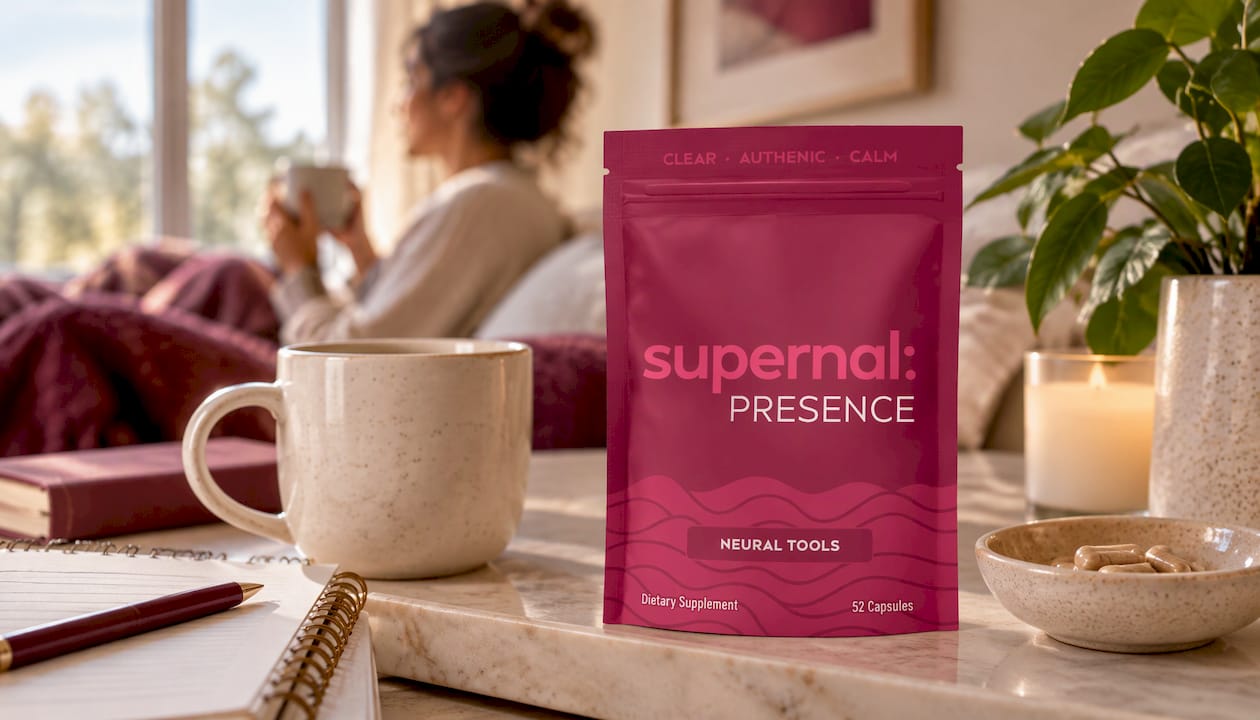
Many nootropics lean on stimulants. For someone who is already wired and overloaded, that can feel like the wrong direction. PRESENCE takes a different approach: it is a capsule formula with ingredients selected to nurture the nervous system, designed to support neurotransmitter health and resilience against nervous system stress. It is designed to support mental clarity, emotional balance and social intelligence without harsh stimulants.
It is built to work alongside the habits above, not replace them. Think of sleep, movement and boundaries as the structure, and PRESENCE as support for the system carrying the load. Our formula is designed so that its benefits develop over time as your nervous system capacity grows.
If you are new to nootropics, a restorative formula is a sensible place to begin. For more on how this category connects to mood and resilience, read our guide to nootropics for mood and mental health support.
PRESENCE is available from $42 per month, as a one-time purchase or a monthly subscription, on the PRESENCE product page.
Using any supplement safely
The NCCIH publishes a free 42-page eBook on complementary approaches studied for stress, anxiety and sleep, covering mindfulness, relaxation, yoga, melatonin and herbal supplements, and it discusses safety as well as usefulness. If you take prescription medication, are pregnant or nursing, or have a medical condition, check with your doctor or pharmacist before adding any supplement. Read the full label, and start with the directions on the package.
Our perspective
Most advice about overwhelm treats it as a thinking problem: breathe, reframe, journal. Those tools are good, and we use them. But we think the better question is why the same load tips you over this month and not last month.
Our answer is capacity. A nervous system that is tired, under-supported and constantly pushed by stimulants has less room for a hard day. That is why we built PRESENCE around a restorative approach: ingredients selected to support neurotransmitter health and resilience, not to whip the system into motion.
We also think clarity and calm are connected. When you are less reactive, you hear people better, choose words more carefully and read a room more accurately. That is what we mean by social intelligence, and it is a quiet result of a steadier nervous system.
Used daily alongside good sleep and honest boundaries, PRESENCE is designed to help you feel more articulate and more level over time. That is the experience we want for you.
Calvin
When overwhelm needs more than self-help
Self-help has limits, and this is a place to be clear about them.
The NIH toolkit advises talking with a mental health professional if you feel unable to cope, have suicidal thoughts, or are using drugs or alcohol to cope. NAMI’s warning-sign guidance adds a wider list: persistent irritability, anxiety or sadness, trauma memories, isolation, disrupted sleep, or increased substance use affecting daily life. If several of these sound familiar, make an appointment with your doctor or a therapist. A supplement and daily habits are not a substitute for that care.
If you or someone you know is in crisis, call or text 988, the Suicide and Crisis Lifeline. According to the NAMI crisis guide, 988 is available 24 hours a day, every day of the year in the United States. The same guide says to call 911 when a situation is dangerous and urgent medical care or law enforcement help is needed. If there is no immediate danger, you can contact your mental health professional for an assessment and next steps.

A simple four-week plan
If you want a starting point, try this sequence. Change the order to suit your life.
Week 1: Sleep and a single skill. Fix a wake time, protect seven hours, and practice the five-minute breathing exercise once a day when you are calm.
Week 2: Lighten the load. Each morning, write the three things that must happen. Drop, delegate or delay one commitment.
Week 3: Add movement and contact. Walk for 20 minutes most days and talk with one person you trust, weekly at minimum.
Week 4: Review. Note which skills helped on which days. The NIH toolkit says usefulness varies, so keep the two or three that worked and retire the rest.
If you add PRESENCE, start it at the beginning of this plan so you can follow how you feel across the full month. Our guide on improving cognitive function naturally covers daily habits that pair well with it.
FAQ
How do I deal with emotional overwhelm right now?
Name what is happening, then slow your breathing with a longer exhale than inhale. Ground yourself by noticing five things you see and four you can touch. Once your body settles, write down the one next action. If a skill does not work the first time, try again or switch, since NAMI notes skills may take several attempts.
Can supplements help with emotional overwhelm?
Some people use supplements to support the nervous system alongside sleep, movement and stress management. PRESENCE is our restorative capsule formula, designed to support neurotransmitter health and resilience without harsh stimulants. Check with your doctor first if you take medication, are pregnant or nursing, or have a health condition.
How do I feel emotionally grounded again?
Use your senses. Feel your feet on the floor, hold a cool object, and run through the 5-4-3-2-1 exercise. The APA also suggests sitting and breathing for five minutes, returning attention gently to the present each time it drifts. Done daily, this becomes easier to reach when you are upset.
Is feeling overwhelmed a sign something is wrong with me?
No. Distressing feelings are not bad in themselves, according to the NAMI HelpLine, even when they feel intense. Overwhelm becomes a reason to seek help when you feel unable to cope, it disrupts sleep and daily life for a long stretch, or you are using alcohol or drugs to get through it.
When should I talk to a professional?
Talk to a doctor or therapist if overwhelm persists, affects your sleep, work or relationships, or leads to substance use. If you have thoughts of suicide or are in crisis, call or text 988 right away. Call 911 if there is immediate danger.
Sources
- NAMI HelpLine: What coping skills can I use to help manage my emotions?
- American Psychological Association: Healthy ways to handle life’s stressors
- NIH: Emotional Wellness Toolkit
- NCCIH: Mind and Body Approaches for Stress and Anxiety
- NCCIH: Stress, Anxiety, and Sleep Problems: Considering Complementary Approaches
- NAMI: When To Reach Out
- NAMI: Navigating a Mental Health Crisis 2025