

How to Recover From Stress: A Practical Plan
You recover from stress by doing three things in order: stop the load from growing, rebuild the basics (sleep, movement, connection, breathing), and give your nervous system enough time to settle. Most short-term stress eases within days to weeks. Stress that has piled up for months takes longer and often needs more than self-care. This guide covers a realistic timeline, a daily plan you can start tonight, how supplements fit in safely, and the signs that you should talk to a professional.
TL;DR
- Recovery is not instant. Acute stress reactions are usually self-limiting and clear within about a month, while long-running stress can take much longer.
- The foundation is simple: at least 7 hours of sleep, regular movement, breathwork or mindfulness, and time with people you trust.
- Supplements can be a supporting layer, never a replacement for the basics. Choose products with fully declared ingredients and check with a clinician if you take medication.
- If stress interferes with daily life, will not go away, or comes with thoughts of self-harm, get professional help. In the U.S., call or text 988.
Table of Contents
- What recovery from stress actually looks like
- How long does it take to recover from stress?
- Step 1: Lower the load before you try to recover
- Step 2: Rebuild the basics your nervous system runs on
- A simple one-week recovery plan
- Where nootropic capsules fit
- Our perspective
- Try a restorative approach with PRESENCE
- When to get professional help
- FAQ
- Sources
What recovery from stress actually looks like
Stress is a natural reaction to change or challenge, and it produces both physical and mental responses. Cleveland Clinic notes that when stress becomes chronic, it can lead to health problems. So the aim is not a life with no pressure. It is a body and mind that can return to baseline after pressure.
That return is a physical process, not just a mindset. Researchers who study the stress response look at how quickly cortisol comes back down after a stressor. One 2023 study found that a higher cortisol awakening response was linked with poorer cortisol recovery after a stress test. In plain terms: people whose mornings start with a strong stress signal may bounce back more slowly later in the day.
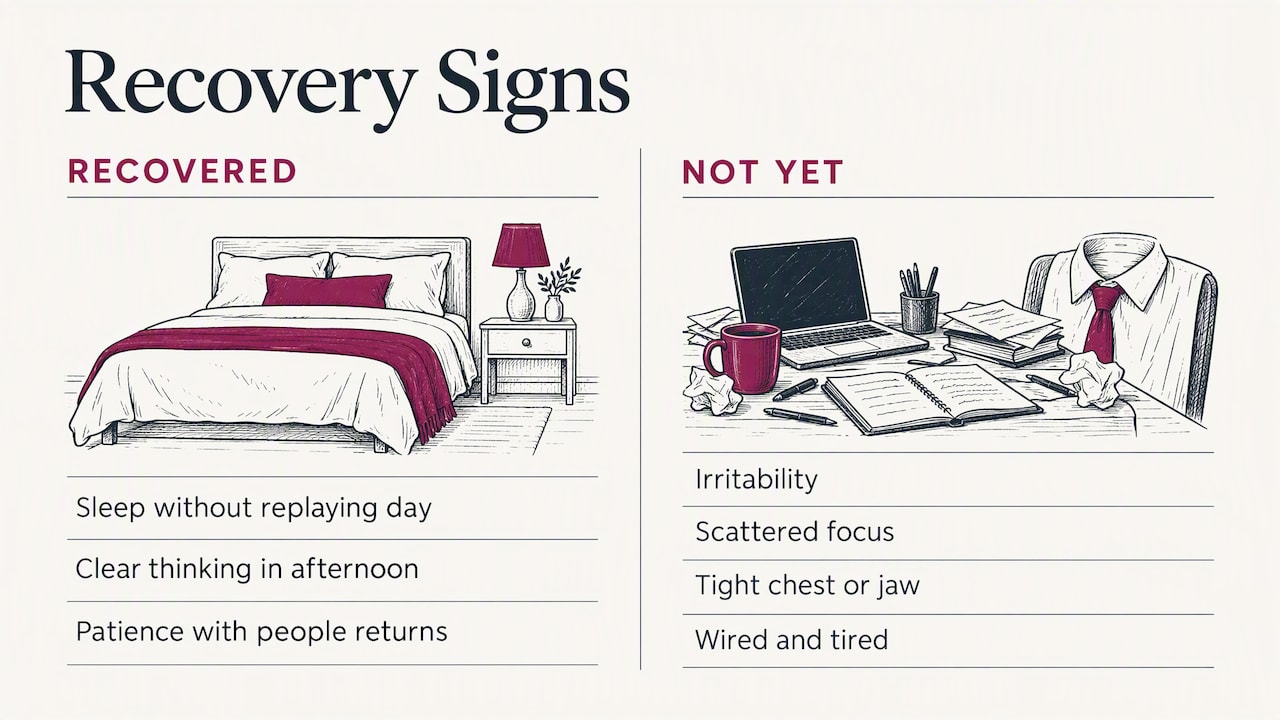
You can notice the same pattern in daily life. Recovered looks like falling asleep without replaying the day, thinking clearly in the afternoon, and recovering your patience with people. Not yet recovered looks like irritability, scattered focus, a tight chest or jaw, and feeling wired and tired at once.
How long does it take to recover from stress?
The honest answer is that it depends on how long and how intense the stress was, and on what else is going on in your life.
| Situation | Typical pattern |
|---|---|
| One hard event or bad week | Often settles within days with sleep, food and rest |
| Acute stress reaction after a shocking event | Symptoms usually last three days to one month and tend to resolve on their own |
| Months of work, caregiving or financial pressure | Weeks to months of steady habits, sometimes with professional support |
| Symptoms that last two weeks or more and make tasks hard | A reason to see a provider, not wait it out |
The research here is still developing. The same 2023 paper that tracked cortisol recovery encourages future work to look beyond short laboratory windows to understand long-term effects. Treat any exact timeline you read online as a rough range, not a promise.
What tends to speed recovery up: consistent sleep, a reduction in the thing causing the stress where you can, and people who help. What tends to slow it down: skipped sleep, constant alerts, alcohol as a coping tool, and isolation.
Step 1: Lower the load before you try to recover
Recovery is hard when new stress arrives faster than you clear the old. Before adding habits, take ten minutes to subtract.
- Name your triggers. The CDC lists identifying what triggers your stress as part of managing it. Write down the three things that spiked your stress most this week.
- Sort them. Which can you drop, delegate, delay or shorten? Which can you do nothing about right now?
- Protect one boundary. A phone-free hour in the evening or a hard stop at a set time is enough.
- Say it to someone. Tell one person you are stretched thin. This is both relief and logistics.
If your exhaustion is mostly mental, with brain fog and trouble finishing simple tasks, our practical plan for recovering from mental exhaustion goes deeper on pacing your workday.
Step 2: Rebuild the basics your nervous system runs on
The habits below are not glamorous, and they are the ones with the strongest official backing. The CDC says you can manage stress through exercise, a consistent sleep schedule, mindfulness or breathwork, social connection and knowing your triggers. It also recommends adults get at least 7 hours of sleep.
Sleep
Sleep is where recovery happens. The NIH notes that sleep helps you think more clearly and focus. Aim for a consistent bedtime and wake time, even on weekends, and keep screens out of the last 30 minutes of the night. If you wake at 3 a.m. with your mind racing, get up, dim the lights and do something dull until you feel drowsy.
Movement
Exercise can boost mood and reduce stress. You do not need a hard workout. Stanford’s lifestyle medicine program points to movement breaks, breathwork and time outdoors as consistent habits that build resilience. A 15 to 30 minute walk most days, ideally outside, is a solid starting point. If you track your workouts, a guide to heart rate recovery after exercise can show how quickly your body settles after effort, which is one rough signal of how well you are recovering overall.
Breathing and relaxation
Mindfulness and breathing practices can help manage stress. A simple routine: breathe in through your nose for four counts, out for six to eight, for two to five minutes. Do it before a meeting, after a hard call, or in bed. For more in-the-moment options, see our guides on how to calm your nerves naturally and how to remain calm under pressure.
People
The NIH says social connections may support health and well-being. When you are depleted, you tend to withdraw, which is exactly when contact helps most. A walk with a friend counts as both movement and connection. If conversation feels harder than it used to, our guide to improving social confidence offers small, practical ways back in.
Food and hydration
The CDC also lists a healthy diet among daily stress-management habits. Regular meals with protein, plenty of water, and limiting late caffeine and alcohol keep your energy steadier, which makes everything else easier.
A simple one-week recovery plan
Building everything at once fails. Layer one habit every couple of days.
| Days | Add this | Keep it small |
|---|---|---|
| 1 to 2 | Fixed wake-up time and a screen cutoff | 30 minutes before bed |
| 3 to 4 | A daily walk | 15 minutes, outside if possible |
| 5 | Breathing practice | Three minutes, twice a day |
| 6 | One social plan | A call, coffee or dinner |
| 7 | Review | What lowered your stress? What did not? Keep the first, change the second |
Stanford’s framing is useful here: the goal is not to eliminate stress but to build resilience through consistent habits that widen your window of tolerance. Small and repeated beats heroic and brief.
Where nootropic capsules fit
Nootropics are supplements people take to support focus, mood or mental performance. For stress recovery, the sensible role is a supporting one, on top of sleep, movement and boundaries. They do not replace those foundations, and no capsule should be expected to fix an overloaded schedule.
If you want to understand the category first, our explainer on what nootropics actually do and our guide to safe nootropics for beginners are good starting points.
What to look for in a stress-support formula
- A full, readable ingredient list. Every active ingredient and dose is declared, not hidden in a proprietary blend.
- A restorative approach rather than heavy stimulants. Stimulant-heavy products can add jitters and disrupt sleep, which works against recovery.
- Ingredients you can look up. If you cannot find what an ingredient is for, skip it.
- Realistic claims. Be wary of anything that promises to erase stress overnight.
Safety: what beginners need to know
The supplement market is not uniform, and some products are dangerous.
- The FDA warns that tianeptine is sold as a nootropic or dietary supplement even though it is not approved for medical use, and that such products can cause severe adverse events and life-threatening interactions with medications. Avoid it.
- The FDA has described a 2024 recall of capsules found to contain undeclared sildenafil, with one product also containing diclofenac, which may raise cardiovascular risk. Buy from sellers who disclose the full formula.
- Under FDA guidance, manufacturers, distributors and others in the supply chain are responsible for making sure their products comply with the law, including rules on pharmaceutical ingredients. That is a reason to buy from a brand that stands behind its label.
Botanicals deserve the same care. The NIH Office of Dietary Supplements says clinical trials suggest ashwagandha extracts may reduce stress, anxiety and cortisol, but that long-term safety is unknown and liver injury has been reported. Some experts advise against it for people who are pregnant or men with hormone-sensitive prostate cancer, and it may interact with some medications. If you are pregnant, nursing, managing a medical condition or taking prescription drugs, ask your doctor or pharmacist before starting any supplement. Our guides on nootropic side effects and whether women can take nootropics safely cover these questions in more detail.
Our perspective
Most stress advice treats your nervous system like a switch: calm down, focus up. In our experience it behaves more like a muscle that has been overworked. It needs rest, the right raw materials and consistent, gentle use before capacity grows.
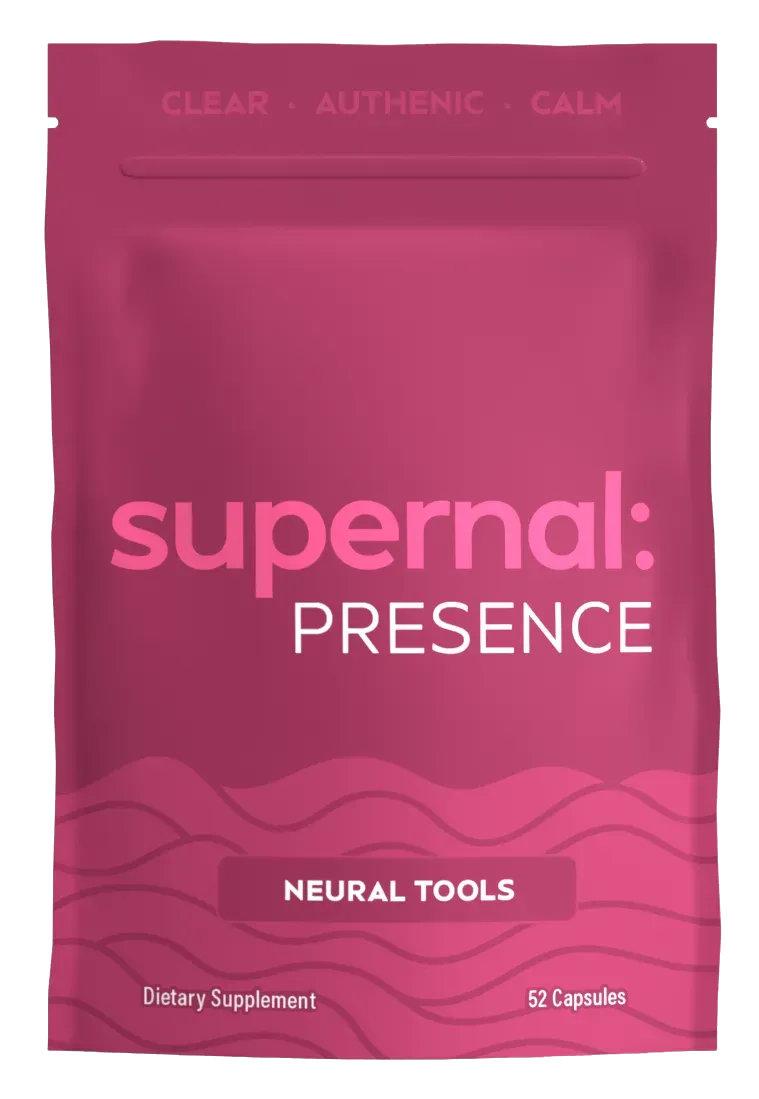
That is why we built PRESENCE as a restorative formula rather than a stimulant. Our formula is designed to support neurotransmitter health and resilience against nervous system stress, so clarity and emotional balance can develop over time instead of spiking and crashing. We want people to feel more articulate and steady in conversations, not just more caffeinated.
We also say plainly that no capsule replaces sleep, movement and good boundaries. We design PRESENCE to sit on top of those habits and make them easier to keep. If you want the thinking behind that approach, read our piece on nervous system support as a foundation.
Calvin
Try a restorative approach with PRESENCE
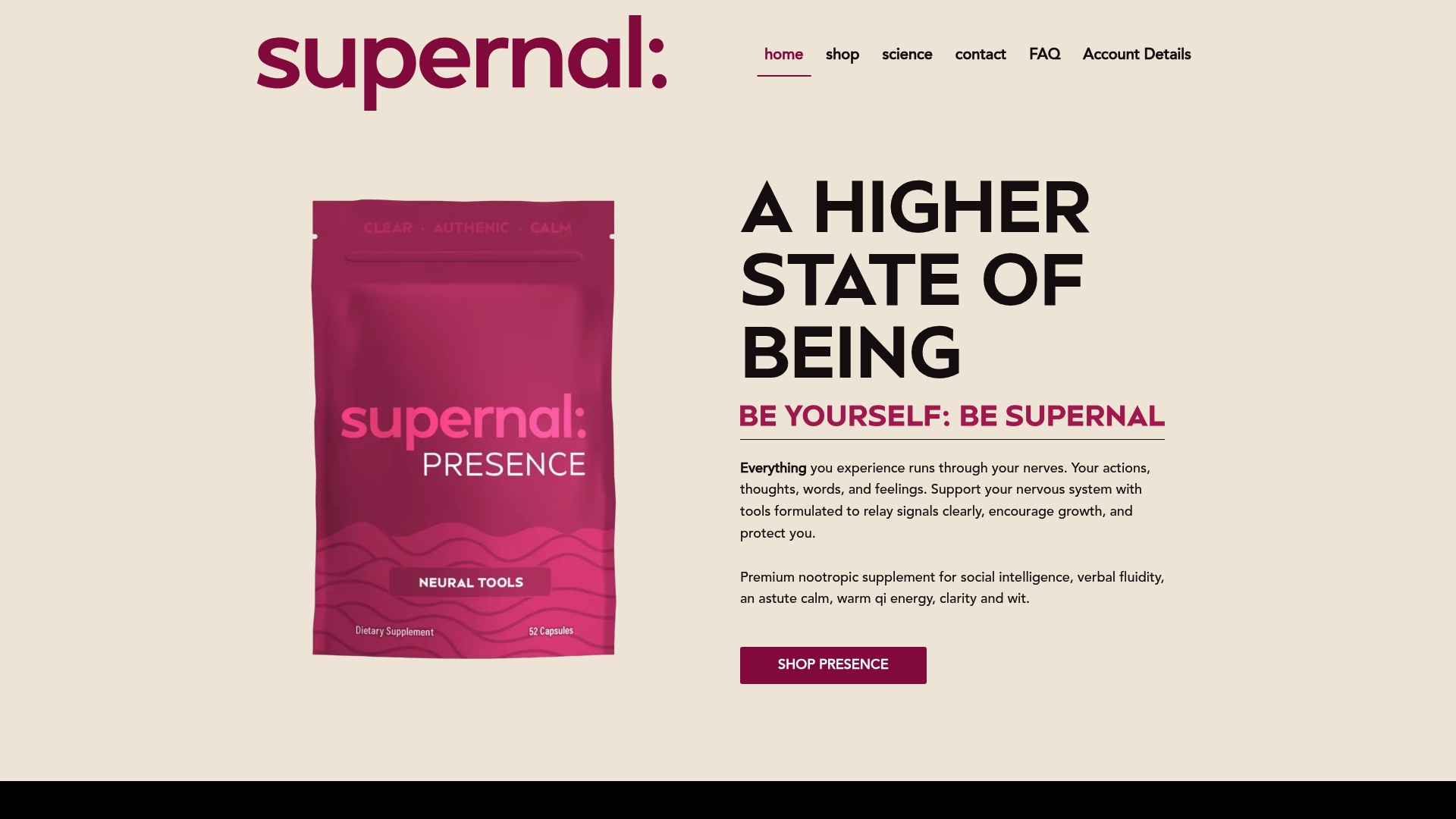
If you are already working on sleep, movement and boundaries and want a supporting layer, PRESENCE is our restorative nootropic capsule for mental clarity, emotional balance and stress resilience, made without harsh stimulants. It is available as a one-time purchase or a monthly subscription, from $42 per month. See PRESENCE and how it is formulated.
If you are newer to this category, start with our overview of nootropics for mood and emotional resilience or our guide on which nootropics work best for anxiety.
When to get professional help
Self-care has limits, and knowing them is part of recovery. The National Institute of Mental Health says to seek help if stress interferes with everyday life, makes you avoid things, seems always present or does not go away. It also advises seeking help for severe symptoms that last two weeks or more, including difficulty completing tasks, and talking to a provider if symptoms worsen or self-care does not help.
If you are in immediate distress or having thoughts of self-harm, call or text 988 in the U.S. to reach crisis support. Start with your primary care doctor or a licensed therapist, who can rule out medical causes, check for anxiety or depression, and build a plan with you.
FAQ
How long does it take to recover from stress?
It depends on the stress. Acute stress reactions usually resolve on their own within three days to a month. Stress that has built up for months generally takes longer. If you are not improving after two weeks of steady self-care, talk to a provider.
What is the fastest way to calm down after a stressful day?
Slow breathing, a short walk and contact with someone you trust are the quickest reliable options. Try breathing in for four counts and out for six to eight for a few minutes, then step outside. Keep screens and alcohol out of the hour before bed so your sleep can do its work.
Can nootropic capsules help with stress recovery?
They can play a supporting role alongside sleep, movement and boundaries, but they are not a substitute for them. Choose a formula with a full ingredient list and no stimulant overload. Our PRESENCE capsule is designed to support the nervous system in a restorative way, and you should check with your doctor first if you take medication or are pregnant.
Are stress supplements safe?
Reputable ones can be, but the category includes risky products. The FDA has warned about tianeptine sold as a supplement and recalled capsules with undeclared drugs. Buy only from sellers that list every ingredient and dose.
When is stress a sign I need help?
When it disrupts daily life, never seems to lift, or severe symptoms last two weeks or more. If you have thoughts of self-harm, call or text 988 right away.
Sources
- Stress: What It Is, Symptoms, Management & Prevention (Cleveland Clinic)
- Revisiting the stress recovery hypothesis (PMC)
- Acute stress disorder (WHO EMRO)
- Managing Stress (CDC)
- Emotional Wellness Toolkit (NIH)
- Daily Habits to Reduce Everyday and Acute Stress (Stanford Lifestyle Medicine)
- FDA warning on tianeptine products
- FDA notice of 2024 supplement recall
- FDA letter to manufacturers of dietary supplements
- Ashwagandha fact sheet (NIH Office of Dietary Supplements)
- I’m So Stressed Out! Fact Sheet (NIMH)
- My Mental Health: Do I Need Help? (NIMH)



3 Comments