
How to Manage Overstimulation: Relief Now and Fewer Overloads Later
To manage overstimulation, cut the input first, then calm your body, then work on the pattern behind it. Step into a quieter, dimmer space, slow your breathing, and give your nervous system a few minutes to settle. Over the following weeks, learn your triggers, build in breaks, and protect the basics (sleep, movement, food, fewer notifications) so the next overload arrives later and lands softer.
This guide walks through all three layers: what overstimulation actually is, what to do in the first five minutes, how to find your triggers, which habits lower your daily load, and where nervous system support fits in.
TL;DR
- Overstimulation is your nervous system receiving more input than it can process. It can feel like irritability, brain fog, restlessness, a racing mind or even chest tightness.
- In the moment, reduce input first: go somewhere quieter and dimmer, slow your breathing, and use earplugs, headphones or sunglasses if you have them.
- Between episodes, track your triggers, take breaks at the first early signs, and cut avoidable noise such as notifications and background sound.
- Recurring or severe overstimulation, especially when it shapes your daily life, deserves a conversation with a doctor or mental health professional.
- Nutrient and nervous system support can be one part of a steady routine, but never a replacement for rest, boundaries and professional care when you need it.
Table of Contents
- What overstimulation feels like
- What to do in the first five minutes
- How to find your triggers
- Daily habits that lower the load
- When overload is really nervous system strain
- Supplements and overstimulation: what the research says
- Our perspective
- Support your nervous system with PRESENCE
- When to talk to a professional
- How to support someone who is overstimulated
- A simple plan you can start this week
- FAQ
- Sources
What overstimulation feels like
Overstimulation happens when sensory input, mental demands or emotional load pile up faster than your brain can filter them. Cleveland Clinic describes sensory overload as overwhelming input that triggers a physiological response through the sympathetic nervous system. That is the same system that runs your fight-or-flight response, which is why overload is not just “being annoyed.” Your body is reacting as if something needs to be escaped.
The signs show up in three areas.
Emotional. Healthline lists irritation and easy annoyance, feeling on edge or restless, and a need to escape among the common adult signs. Many people describe feeling drained and short-tempered at once.
Mental. The same Healthline guide notes trouble focusing, a foggy head, and difficulty remembering or making decisions. If you find yourself rereading the same email four times, or you cannot decide what to eat for dinner after a long day of meetings, this is the pattern.
Physical. Cleveland Clinic lists dizziness, a flushed face, shaking, sweating and chest tightness, and says that unchecked overload can escalate into a panic attack. WebMD adds that people often feel a pull to cover their ears and eyes to block input.
A useful way to think about it: overstimulation is a load problem, not a character flaw. Everyone has a capacity, and it moves with sleep, stress, illness and how much you have already taken in that day. The practical goal is to lower the load and widen the capacity.
What to do in the first five minutes
When you notice overload building, trying to push through is the least effective option. The Mental Health Hotline’s advice is blunt: the goal in the moment is to cut input, and it says five minutes of reduced input can do more than thirty minutes of coping in place. Use this sequence.
1. Remove the input
Leave the room if you can. Find somewhere quieter and dimmer: a stairwell, an empty meeting room, your parked car, a bathroom stall. If you cannot leave, lower what you can control. Turn off a screen, dim a light, put on noise-canceling headphones, earplugs or sunglasses. The Mental Health Hotline lists these sensory tools as useful when you need them.
2. Slow your breathing
Slow breathing tells your body the threat has passed. The same source suggests box breathing or the 4-7-8 pattern. For box breathing, breathe in for four counts, hold four, breathe out four, hold four, and repeat for a few minutes. If holding your breath makes you feel worse, skip the holds and simply make the exhale longer than the inhale.
3. Ground yourself in the present
A UK trauma-support resource explains that grounding can slow the fight, flight or freeze response by engaging the senses in the present moment. Its toolkit includes naming what you can see, hear, feel and taste, tensing and releasing muscle groups from your feet up to your head, and using distractors such as counting backward or listening to music or a podcast.
A simple version you can run anywhere:
- Name five things you can see.
- Name four things you can feel (your feet on the floor, the chair under you).
- Name three things you can hear.
- Take one slow breath, then repeat if needed.
4. Give yourself recovery time
An overload episode usually leaves you tired. The West Cheshire Autism Hub notes that people often feel tired or exhausted afterward and recommends having a recovery plan ready. Decide in advance what yours looks like: ten quiet minutes, water, a snack, a walk without your phone. Then return to the day at a lower speed, not a higher one.
If you want a broader plan for the aftermath, our guides on how to recover from stress and how to recover from mental exhaustion cover the next few hours and days.
How to find your triggers
Triggers differ from person to person, so guessing from a generic list only gets you so far. Cleveland Clinic lists common sensory culprits: loud or persistent noise, bright or flashing lights, strong smells such as perfume or cleaning products, scratchy fabrics or tight clothing, and new or spicy foods. Add the non-sensory ones many people miss: back-to-back meetings, constant messages, open-plan offices, social events after a full workday, and decisions stacked on decisions.
To find your own, Cleveland Clinic recommends noticing when overload happens and asking which sensations were present, so that patterns emerge. Here is a two-week method that makes this concrete.
- Keep a short log. When you feel overloaded, write one line: time, place, what was going on, what you had slept and eaten.
- Rate it. Use a 1 to 5 scale for how intense it felt.
- Look for repeats. After two weeks, circle anything that appears three or more times. Common patterns are a certain time of day, a certain room, or a certain kind of day.
- Check the background factors. The West Cheshire guide points out that being ill or stressed makes overload happen faster. If your overloads cluster on poor-sleep days, the trigger may be your reduced capacity rather than the noise itself.
Once you have two or three real triggers, you can plan around them instead of bracing for everything.
Daily habits that lower the load
Prevention works better than rescue. The point is not to live in silence but to keep your baseline lower so ordinary days do not tip you over.
Plan for known triggers and take early breaks
NewYork-Presbyterian’s psychologists advise planning ahead for known triggers, choosing low-sensory options when possible, and stepping away at the first early signs. In practice: schedule a ten-minute gap after your most demanding meeting, choose the quieter restaurant, shop at off-peak hours, and leave a party a little earlier than you feel you “should.”
The West Cheshire guide frames this as being preventative rather than reactive: spot the early “yellow zone” signs, such as irritability or tuning out, and use a small toolkit then, before you hit the red zone.
Cut unnecessary noise
The same NYP guidance recommends reducing unnecessary stimuli such as phone notifications and background noise. Turn off banner alerts for everything that is not a person you need to hear from. Stop running a podcast, TV or music under every task. Silence is a useful input to schedule.
Set screen boundaries
The Well by Northwell suggests environmental limits such as charging your phone outside the bedroom and using Do Not Disturb or Sleep Focus, with a 30-minute screen-free window before bed. A calmer evening protects your sleep, and sleep is the biggest single factor in how much input you can handle the next day.
Adjust your light and sound
A UK NHS trust page on ADHD at work notes that noise, lights, movement, smells and clutter can worsen focus, and suggests practical fixes: noise-canceling headphones, ambient music, and lighting that is not intense or flickering, such as dimmer switches and adjustable desk lamps. You do not need an ADHD diagnosis to benefit from a warmer lamp and a quieter desk.

Make your strategies personal and daily
A sensory-strategy guide from the USC Kortschak Center stresses that each person experiences sensory input differently, and encourages applying strategies daily rather than only in a crisis. Treat your toolkit like a routine, not an emergency kit.
Protect the basics
Sleep, regular movement, regular meals and hydration do not sound exciting, but they raise the ceiling on what your nervous system can absorb. Caffeine deserves a special look: if you feel wired and jumpy after your second coffee, our explainer on why caffeine can leave you wired and anxious is a good place to start adjusting.
When overload is really nervous system strain
Sometimes the issue is not a noisy room but a nervous system that has been running hot for weeks. Chronic stress, short sleep and constant demands lower your threshold, so things that once felt fine now feel like too much. You may notice tension, headaches, stomach trouble or fatigue that seem to have no clear cause. Understanding how stress gets expressed as physical symptoms can help you recognize when overload has moved beyond the sensory and into the body.
If this sounds familiar, the longer-term work is about regulation: building the capacity of your nervous system to return to baseline. Our guides on nervous system regulation, calming your nerves naturally and staying calm under pressure lay out what helps fast and what helps over time. If your attention drifts when you are overloaded, how to stop mind wandering covers that side.
Supplements and overstimulation: what the research says
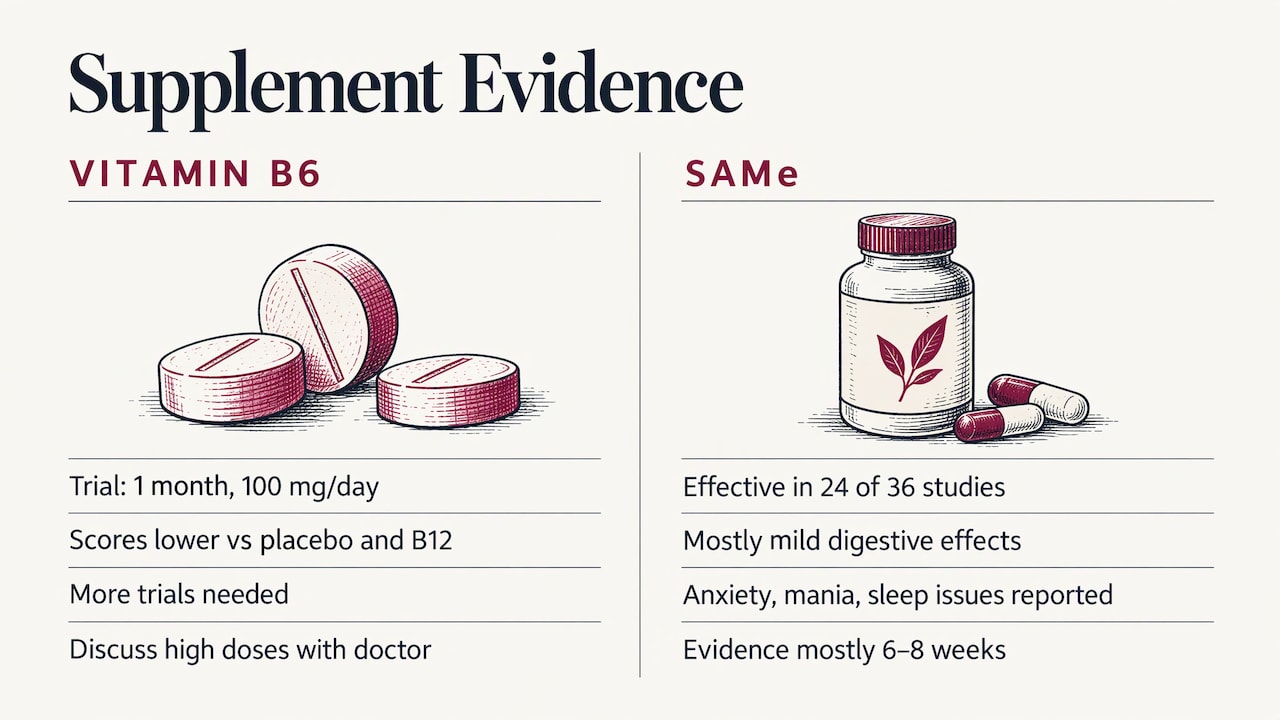
People searching for overstimulation relief often wonder about supplements, and the honest picture is that research is early and specific. One randomized trial in adults with high sensory over-responsivity found that one month of 100 mg per day of vitamin B6 reduced sensory over-responsivity scores compared with placebo and with B12. The authors propose that B6 supports the conversion of excitatory glutamate into calming GABA, and they call for further trials. It is a promising mechanism, not a settled recommendation, and high-dose vitamins are something to discuss with your doctor first.
Other compounds come with real safety considerations. A 2024 systematic review of SAMe found it was effective in 24 of 36 included studies, with mostly mild digestive side effects, but it also reported increased anxiety, mania or hypomania, sleep disruption and headache in some cases, plus a case report of a mood disorder when combined with an SSRI. The review notes that most evidence covers only 6 to 8 weeks, with little long-term data past 12 months.
The practical lesson is to choose carefully. If you take prescription medication, especially antidepressants, are pregnant or nursing, or have a mood or neurological condition, talk to your doctor or pharmacist before starting any supplement. For a wider look at safe starting points, see our guides on safe nootropics for beginners and nootropic side effects and smart formulation.
Our perspective
Most advice about overstimulation treats it as a problem outside you: too much noise, too many screens, too many people. That advice is right, and you should use it. But we think it misses half the picture. The same room feels very different depending on the state of the nervous system walking into it.
That is why we built PRESENCE around a restorative approach rather than a stimulating one. A lot of nootropics push the system harder, which is the opposite of what an overloaded person needs. PRESENCE is formulated with ingredients selected to nurture the nervous system, supporting neurotransmitter health and resilience against nervous system stress, without relying on harsh stimulants.
Our view is that capacity is built, not forced. Quiet breaks, good sleep and fewer notifications lower the load. Consistent nervous system support is designed to raise what you can carry. Used together, they give you more room between feeling fine and feeling flooded, and that room is where clarity, patience and presence live.
Calvin
Support your nervous system with PRESENCE
If you handle the environment and your habits and still want steady daily support, PRESENCE is our restorative nootropic in capsule form. It is designed to support neurotransmitter health, mental clarity, emotional balance and resilience against nervous system stress, without harsh stimulants. It is available as a one-time purchase or a monthly subscription, from $42 per month.

You can see the full details on the PRESENCE product page. If you are new to this category, start with what nootropics actually do and read about which nootropics suit anxiety without sedation.
When to talk to a professional
Self-management has limits, and it is smart to know them. WebMD advises speaking with your doctor, who can connect you to mental health resources and discuss therapy or medication depending on your age, triggers and any associated conditions. Healthline similarly recommends talking with a healthcare professional if overstimulation makes daily life difficult.
See a doctor or therapist if:
- Overload happens most days, or it is changing where you go and who you see. The Mental Health Hotline says this is worth bringing to a clinician.
- Episodes include chest tightness, shaking or panic that you cannot bring down with slowing your breath.
- You suspect an underlying condition such as anxiety, ADHD, autism or sensory processing differences, which can all make overload more frequent.
- Strategies that used to work have stopped working.
If chest pain is severe or comes with shortness of breath, treat it as a medical emergency and call 911 rather than assuming it is overload.
How to support someone who is overstimulated
If a partner, child or coworker is overwhelmed, your calm matters more than your words. The UK resource on stabilization advises caregivers to stay calm, use a soft and even voice, validate the person’s experience, ask without judgment, avoid pushing for more information, and seek help if stabilization does not work.
Three quick moves help most:
- Lower the environment: dim lights, turn off the TV, move to a quieter room.
- Offer a choice, not a demand: “Do you want to sit in the other room, or do you want me to stay?”
- Wait. Do not ask them to explain until they have settled.
A simple plan you can start this week
- Today: Turn off non-essential notifications and pick one quiet spot you can retreat to at work or at home.
- This week: Start the trigger log. Add one line each time you feel overloaded.
- Every day: Schedule two short breaks, even five minutes, before you feel you need them.
- Every evening: Keep a screen-free window before bed.
- After two weeks: Review the log, remove or plan around your top trigger, and decide whether additional nervous system support makes sense for you.
FAQ
How do I calm overstimulation quickly?
Move somewhere quieter and dimmer, then slow your breathing with box breathing or a longer exhale. Add earplugs, headphones or sunglasses if you have them. Grounding exercises, such as naming things you can see, hear and feel, help bring your attention back to the present.
What are the symptoms of an overstimulated nervous system?
Common signs include irritability, restlessness, trouble concentrating, brain fog and difficulty making decisions. Physical symptoms can include dizziness, sweating, shaking and chest tightness. If symptoms are frequent or severe, talk with a healthcare professional.
Can supplements help with overstimulation?
Some nutrients are being studied, such as vitamin B6 in one small trial on sensory over-responsivity, but research is still early. Supplements work best alongside rest, boundaries and lower input. Check with your doctor or pharmacist first if you take medication or have a health condition.
How do I find out what triggers my overstimulation?
Keep a short log for two weeks noting the time, place, what was happening and how you slept. Patterns usually appear quickly. Common triggers include noise, bright light, strong smells, crowded places and constant notifications.
When is overstimulation a sign I need professional help?
If it happens most days, limits your activities or relationships, or comes with panic-like symptoms, see a doctor or mental health professional. They can check for conditions such as anxiety or ADHD and suggest therapy or other treatment.
Sources
- Cleveland Clinic: Sensory Overload: What It Is and How To Manage
- WebMD: Sensory Overload and Anxiety
- Healthline: Overstimulation in Adults: Common Signs and How to Manage
- Mental Health Hotline: Addressing Overstimulation
- The Resilience Resource: Stabilization and Grounding
- West Cheshire Autism Hub: De-escalation techniques for sensory overload
- NewYork-Presbyterian: 7 Psychologist-Approved Ways to Cope with Overstimulation
- The Well by Northwell: How to Reduce Screen Time
- Leicestershire Partnership NHS Trust: ADHD at work
- USC Kortschak Center: Sensory Strategies for Wellness
- PubMed: High-dose Vitamin-B6 reduces sensory over-responsivity
- PMC: S-Adenosylmethionine (SAMe) for Central Nervous System Health